RIder biomechanics
You felt it. Now understand it, and apply it in your riding
If you rode the simulator or attended a session at Horse Expo Canada, this is your next step.
What you experienced was not random.
It was a change in how your body organized movement.
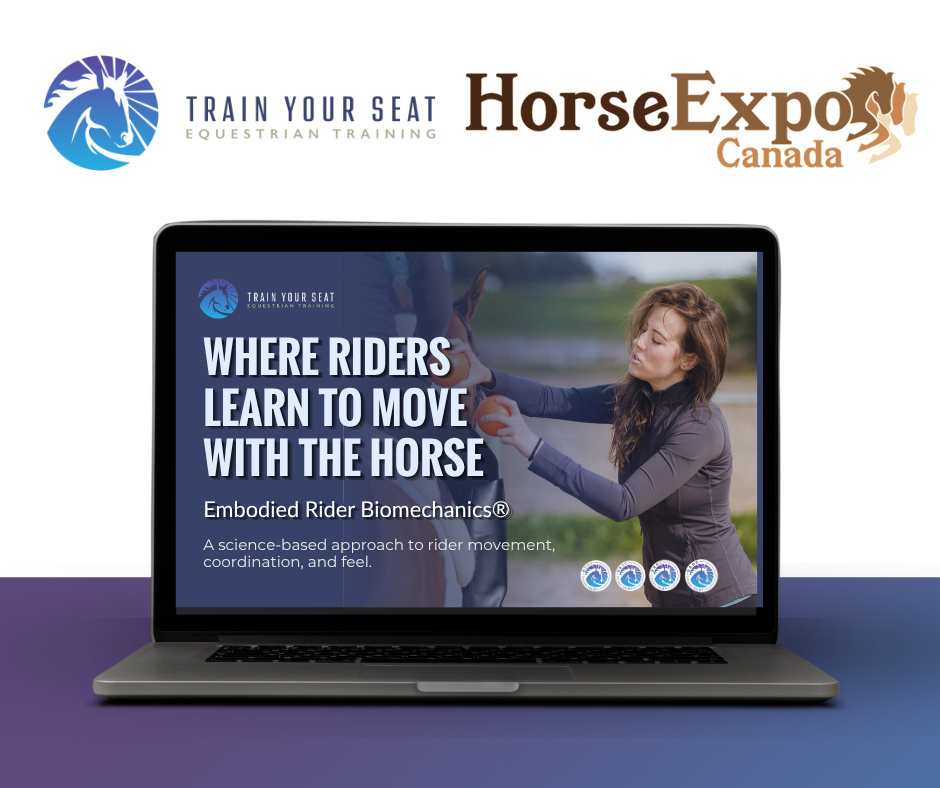
Turn what you felt into something you can use. This is not theory, it is directly applicable to your riding.
Download the presentation and start applying it in your riding.
Inside:
✦ How the rider's body influences the horse's movement
✦ Why stability does not come from holding position
✦ How coordination between seat, leg, and hand actually works
✦ What to focus on when things feel inconsistent
Enter your email to receive the presentation:
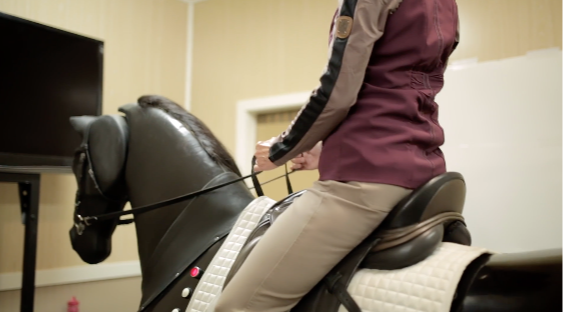
What changed on the simulator
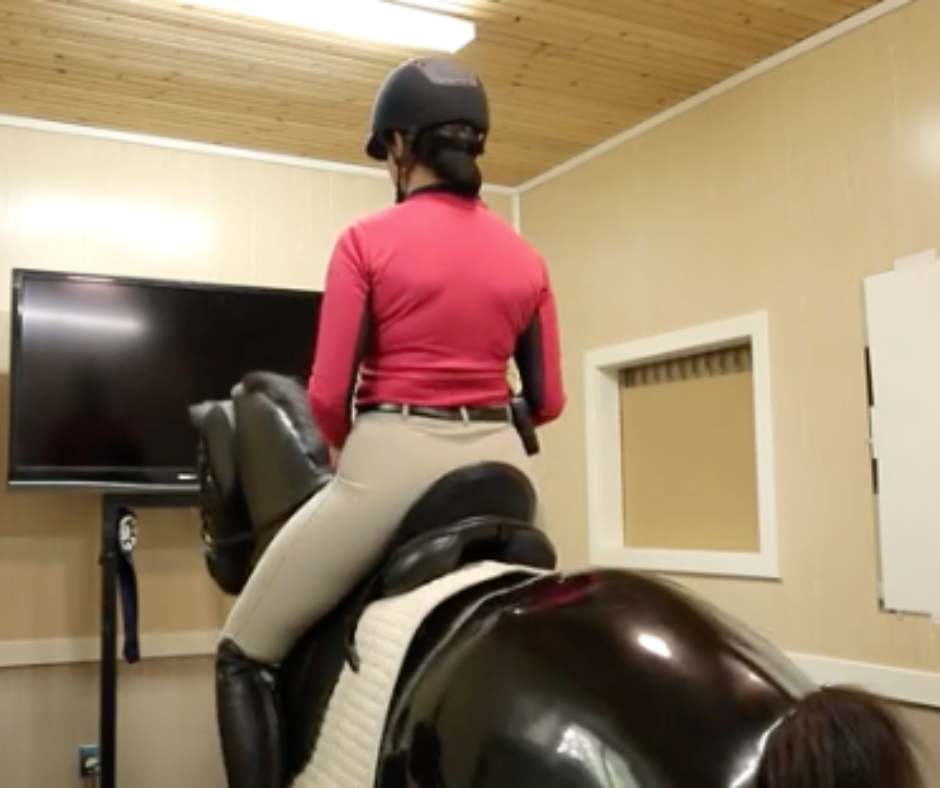
If you rode the Racewood Riding Simulator, you may have noticed:
-
Your balance felt more stable without gripping
-
The reins felt more consistent in your hands
-
Your body followed the movement more easily
These changes come from how your body absorbs force and organizes movement, not from trying to sit still or hold a position.
Most riders are taught to correct the outcome.
We focus on changing the underlying coordination.
Applied biomechanics through embodied learning
At Train Your Seat®, rider biomechanics is not about position.
It is about how the body moves, adapts, and communicates with the horse.
We teach this through:

Functional anatomy that relates directly to riding
Biomechanics of movement, not static posture
Imagery & embodiment to create change in the nervous system
Practical application in the saddle
Choose your next step
FOR TRAINERS
If your riding feels inconsistent, unstable, or effortful, the issue is often not strength or effort, but coordination.
You will learn how to:
- Organize your seat so it follows the horse’s movement
- Stabilize without gripping or bracing
- Improve timing and clarity of your aids
- Reduce tension that interferes with communication
This leads to a horse that can move more freely and respond more clearly.
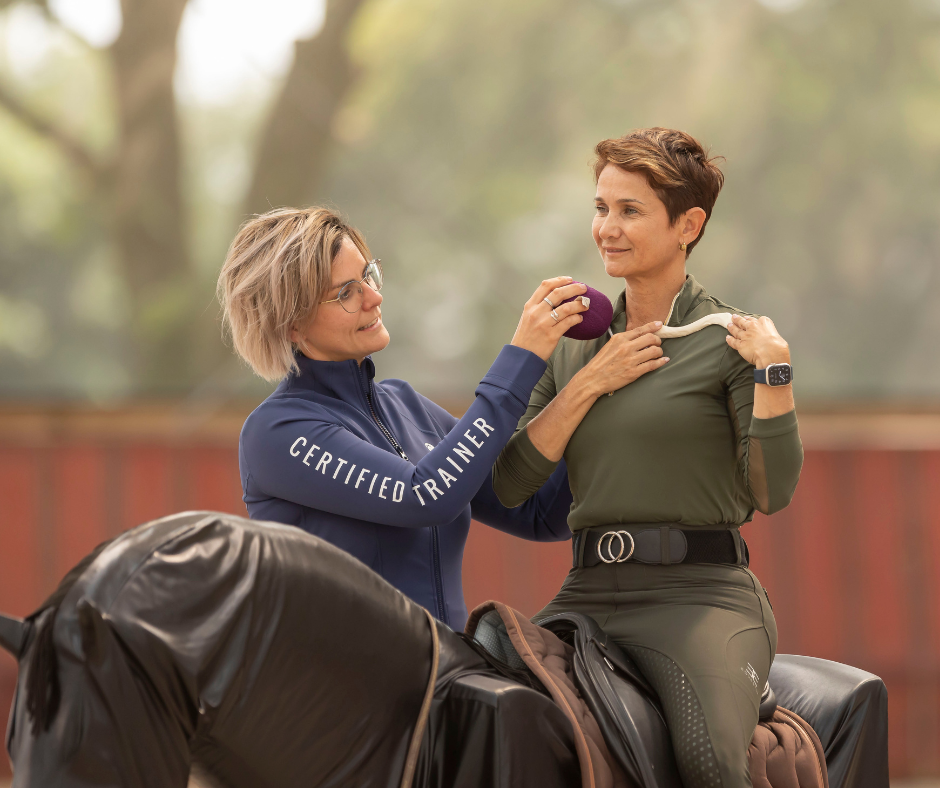
FOR RIDERS
If you are coaching riders and feel like you are repeating the same corrections without lasting change, this work gives you a different framework.
You will learn how to:
- See where movement breaks down in the rider’s body
- Understand cause, not just symptoms
- Use imagery and embodiment to create measurable change
- Teach riders how to coordinate, not just position themselves
This allows you to coach more precisely and effectively.
This is not about doing more.
It is about doing what matters, more effectively.
ALYSEN STARKO-BOWES
Alysen is the founder of Train Your Seat Equestrian Training & Rider Biomechanics
────
Alysen Starko Bowes is the founder of Train Your Seat, an embodied rider biomechanics education system used by trainers and riders around the world. With more than a decade of experience working with equestrians, she brings together kinesiology, biomechanics, psychology, imagery, and somatic education to help riders improve coordination, communication, and movement efficiency.
Alysen has presented at the World Equestrian Games, is a published author, and collaborated with the University of Gloucestershire and Hartpury University on research examining rider position. Her work has been featured in Your Horse Magazine and the World Equestrian Center Magazine. Earlier in her career she served as faculty for an imagery based movement education method following extensive training with leading experts in mind body science.
Her work began in childhood with horses, grew through her background in psychology and competitive dance, and evolved into a comprehensive methodology that recognizes the rider and horse as an integrated system. Through Train Your Seat, Alysen trains and certifies coaches in evidence based, rider centered biomechanics that support ethical communication and improved performance for both partners.